Some smartphones don’t just sell well — they change the entire industry. They set new standards, killed off technology that came before them and introduced the features every phone we use today was built around. These are the GOATs: the greatest smartphones of all time.
This list celebrates the handsets that genuinely mattered — not just the best-sellers, but the ones that redefined what a phone could be at the moment they launched. Alongside each entry we’ve included the key technical specifications, so you can understand exactly why each device mattered. Read through and see how many of these industry-shaping classics you’ve owned over the years — and be ready to argue about the ones you think we missed.
What Makes a Smartphone a GOAT?
Before we get to the list, let’s set the criteria, because calling a phone the “greatest of all time” should mean more than just liking it. A genuinely great smartphone needs to do several things at once, otherwise it’s just another good phone that gets forgotten the year after it launches. The phones below earned their place for a combination of reasons.
- Change the industry: Introduce a feature, a design or a piece of software that every rival scrambled to copy the following season. Innovation is what separates a GOAT from a simply very good device.
- Be iconic in design: Recognizable at a glance, desirable to own, and built to a standard that still feels premium years later. Iconic design is why some of these phones still look good on a shelf in 2026.
- Deliver a real experience: Software, camera, battery and usability that actually impressed at launch — not just impressive numbers printed on a spec sheet that didn’t translate into daily use.
- Stand the test of time: Influence the phones that came after it. The greatest devices are the ones whose fingerprints are still all over the models we buy today, ten or fifteen years later.
With those rules in mind, here are our picks for the greatest smartphones of all time, presented roughly in order of how much they shaped the industry. Each entry includes the standout specifications that made that phone special, along with a longer look at why it earned its place on this list.
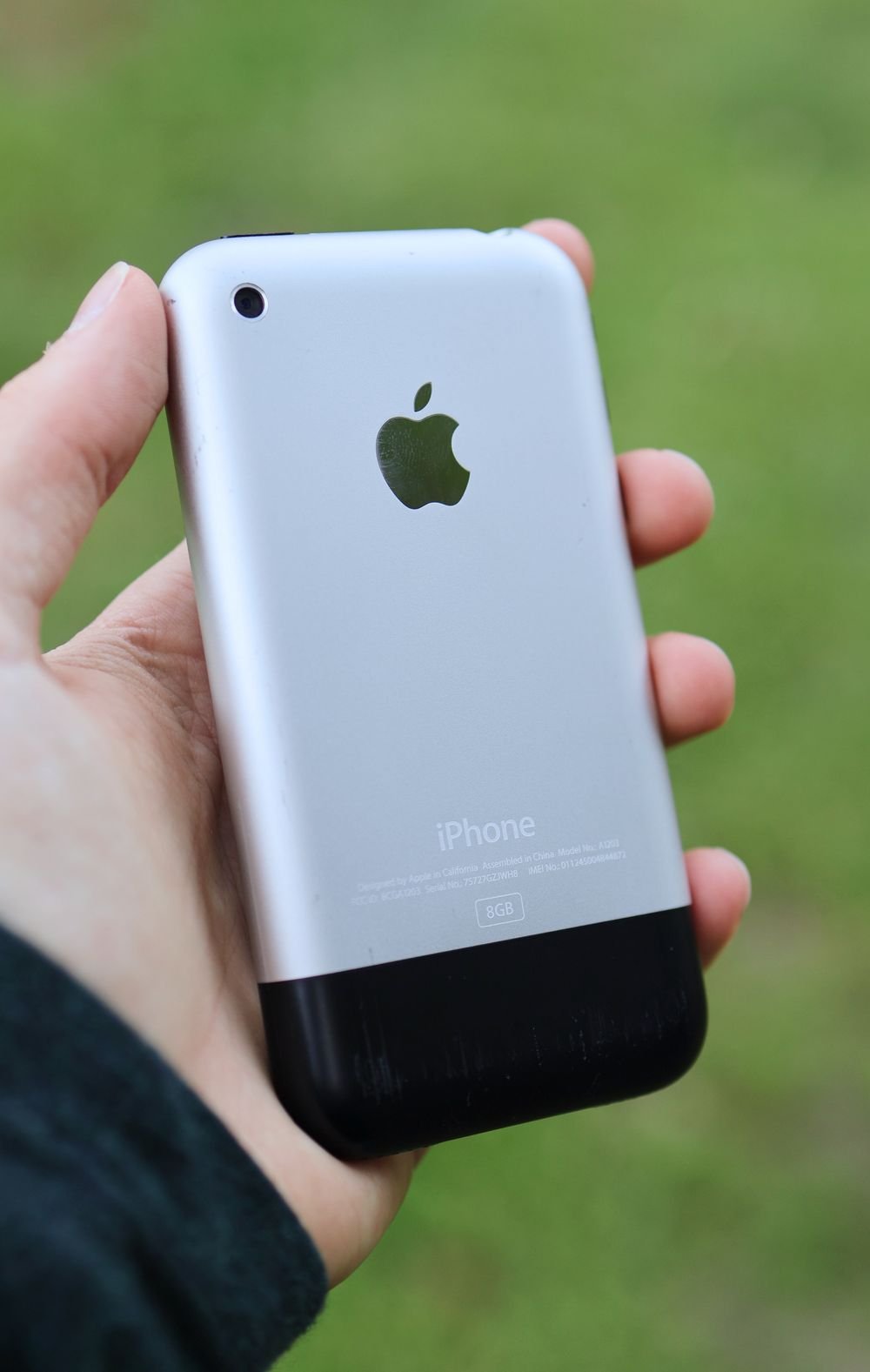
1. The Original iPhone (2007) — The One That Started It All
You can’t talk about the greatest smartphones of all time without starting with the first iPhone, because without it, the modern phone market simply would not exist in the form we know today. In 2007, virtually every phone on the market had a physical keyboard, a resistive touchscreen that needed a stylus, or both — and the whole idea of a full-touchscreen device with a usable web browser was still considered an expensive gamble. Apple ignored every one of those conventions and shipped the 3.5-inch iPhone with the multi-touch interface that defined the next era of computing. It wasn’t just that the interface felt magic; it was that the operating system, the browser and the email client all worked better than anything that existed on a phone at the time.
What made the original iPhone truly great, rather than merely ahead of its time, was how completely it reset expectations. Within a year or two, every major manufacturer had abandoned keyboards and styluses to copy the full-touchscreen template, and the ground rules for how we interact with phones have barely changed since. Whether you love Apple or not, every modern touchscreen smartphone — Android included — owes its existence to the 2007 iPhone. It wasn’t just a great phone; it redefined what a smartphone could be, and it still sits at the very top of this list for that reason alone.
Key specs of the original iPhone (2007):
- Display: 3.5-inch multi-touch LCD, 320×480 pixels
- Processor: Samsung ARM 620 MHz (single core)
- RAM / Storage: 128MB RAM, 4/8/16GB storage
- Camera: 2MP rear, no front camera
- Battery: 1,400mAh, up to 8 hours talk time
- OS: iPhone OS 1.0 (origin unknown), no app store at launch
2. Google Nexus One (2010) — The Pure Android Standard
Long before the Pixel existed, the Nexus One set the template for how Google Android phones could work, and in doing so it quietly created the idea of the “pure Android” device. The Nexus One paired a then-premium 3.7-inch AMOLED display with the 1GHz Snapdragon processor, and crucially it ran completely stock Android — no manufacturer skins, no duplicated apps, no laggy overlays. Google shipped updates directly to the device, weeks or months before carrier-versions of the same software reached anyone else. For Android fans in 2010, that was a revelation, because the Android experience everyone else was selling was dominated by heavily customised interfaces that slowed the hardware down.
Why does the Nexus One still matter over a decade later? Because it defined the model that Google has followed ever since. Today’s Pixel phones — the direct descendants of the Nexus line — are still built around that same philosophy: clean software, fast updates straight from Google, and a competitive camera that leans on software smarts. The Nexus One also quietly proved that a good Android phone could rival anything Apple was making, which forced the whole ecosystem to improve. For Android purists, the Nexus One is the original GOAT, and its influence is visible in every Pixel and every motivated “stock Android” device released since.
Key specs of the Google Nexus One (2010):
- Display: 3.7-inch AMOLED, 480×800 pixels
- Processor: Qualcomm Snapdragon QSD8250 1GHz
- RAM / Storage: 512MB RAM, 512MB storage + microSD
- Camera: 5MP rear with LED flash, VGA front
- Battery: 1,400mAh, removable
- OS: Android 2.1 Eclair, upgradeable to 2.3 Gingerbread
3. Samsung Galaxy S2 (2011) — The Android Flagship That Beat Everyone
If the Nexus One was the purist’s dream, the Galaxy S2 was the device that brought mainstream Android to life and made Samsung the king of the ecosystem. When it launched in 2011, the Galaxy S2 managed to be both thinner and faster than everything around it, packing the dual-core Exynos 4210 processor at a time when most rivals were still working with single-core silicon. Samsung also put real effort into the 4.3-inch Super AMOLED Plus display, the 8MP camera and the 1,650mAh battery, and the overall package was more polished than anything the company had shipped before. It was the phone that convinced millions of people that Android could feel premium.
The deeper reason the Galaxy S2 belongs on any greatest-phones list is that it changed Samsung’s trajectory permanently. Before the S2, Samsung’s Android phones were competent but forgettable; the Galaxy S2 established the formula — big bright screen, fast silicon, competitive camera, popular pricing across many markets — that the Galaxy line has followed every year since, all the way to the flagship range Samsung sells in 2026. It’s also the phone that helped Android overtake iOS in worldwide market share, which is one of the most significant shifts in the history of consumer electronics. For those reasons, the Galaxy S2 deserves its spot as the Android flagship that beat everyone, and arguably still the most important Samsung phone ever.
Key specs of the Samsung Galaxy S2 (2011):
- Display: 4.3-inch Super AMOLED Plus, 480×800 pixels
- Processor: Samsung Exynos 4210 dual-core 1.2GHz
- RAM / Storage: 1GB RAM, 16/32GB + microSD
- Camera: 8MP rear with 1080p video, 2MP front
- Battery: 1,650mAh, removable
- OS: Android 2.3 Gingerbread, upgradeable to 4.1 Jelly Bean
4. iPhone 4 (2010) — The Design That Changed Everything
With its glass-and-stainless-steel build and the legendary “Retina” display, the iPhone 4 didn’t just look different — it raised the design and display bar so high that the entire industry spent the next few years trying to catch up. The 3.5-inch Retina display, with its 640×960 resolution and ~326 pixels per inch, was so sharp that Apple named the feature after the fact that the human eye couldn’t resolve individual pixels at normal viewing distance. It also introduced the front-facing camera for FaceTime, a feature we now take completely for granted on every smartphone made today. In 2010, holding an iPhone 4 next to most other phones made the competition look like toys.
Decades later, the iPhone 4’s influence is still visible in the design language of Apple’s own lineup — the flat-sided, glass-sandwich look of the iPhone 4 is almost exactly the design Apple returned to with the modern iPhone 12, 13, 14 and 15 series. That’s the ultimate proof that a product is a GOAT: a design so correct that the company that made it abandoned it, then came back to it a decade later because nothing else worked as well. For its combination of materials, screen quality, camera and the beginning of the selfie era, the iPhone 4 is one of the most important smartphones of all time.
Key specs of the iPhone 4 (2010):
- Display: 3.5-inch IPS LCD “Retina”, 640×960 pixels
- Processor: Apple A4 1GHz
- RAM / Storage: 512MB RAM, 8/16/32GB storage
- Camera: 5MP rear with LED flash + 720p video, VGA front for FaceTime
- Battery: 1,420mAh, up to 7 hours 3G talk time
- OS: iOS 4, upgradeable through iOS 7.1.2
5. Nokia 3310 (2000) — The Indestructible Icon
Technically it belongs to the pre-smartphone generation, but no list of the greatest phones of all time would be complete without the Nokia 3310, because it is probably the most famous and most beloved handset ever built. The 3310 was legendary for its build quality — the phone that survived drops, throws, water spills and the occasional car run-over, earning a cult reputation that has been passed down to every generation since. Its 900mAh battery famously lasted for days on end, its monochrome screen was readable in direct sunlight, and its iconic Snake game kept millions occupied on school buses and office desks. Over 126 million of these sold, making it one of the best-selling gadgets of all time.
What makes the 3310 a true GOAT rather than just a nostalgic memory is that it defined an entire era of mobile phones. It proved that a phone could be practical, reliable, affordable and fun at the same time, and its design language defined Nokia’s mid-range for the better part of a decade. When the original dropped into the modern world with almost identical styling, it sold strongly again purely on nostalgia and those same durable bones. Ask anyone about unkillable phones and this is the first one they’ll name, decades after it launched. For sheer impact on the culture of mobile and the number of people who owned one, the Nokia 3310 has few peers anywhere in the history of the industry.
Key specs of the Nokia 3310 (2000):
- Display: 84×48 pixel monochrome LCD
- Storage: 900mAh battery famously lasting for days on end
- Battery: 900mAh, up to ~7 days standby time
- Camera: none
- Connectivity: GSM 900/1800, SMS, Snake II, WAP when available
- OS: Series 20/30 software platform (no app store)
6. OnePlus One (2014) — The Flagship Killer
The OnePlus One rewrote the rules on value so completely that it created a category. In 2014, true flagship phones routinely cost $600 or more, and buying one meant accepting either a heavy price or noticeable compromises. The OnePlus One instead packed genuine flagship specifications — the Snapdragon 801 processor, 3GB of RAM, up to 64GB of storage and a 5.5-inch 1080p display — at a price of around $299. To make matters more interesting, the phone launched through a strictly invitation-only system, which turned buying one into an event and generated a level of hype that few phones have ever matched. The community around it, and the “Never Settle” slogan, gave the brand an almost cult following.
The OnePlus One matters on this list more for what it did to the industry than what it did in the hand, because it demonstrated that mid-range pricing and flagship performance were not a contradiction. That single phone proved there was a huge audience that wanted premium performance without the premium price tag, and manufacturers everywhere responded — today’s huge market for capable mid-range phones, devices that cost a fraction of a flagship while delivering 90% of the experience, is a direct descendant of the OnePlus One’s “flagship killer” bet. Every brand that now advertises performance “for the price” is playing by rules OnePlus wrote in 2014. For changing the economics of the entire smartphone market, the OnePlus One earns its GOAT badge.
Key specs of the OnePlus One (2014):
- Display: 5.5-inch LTPS LCD, 1080×1920 pixels
- Processor: Qualcomm Snapdragon 801 quad-core 2.5GHz
- RAM / Storage: 3GB RAM, 16/64GB (non-expandable)
- Camera: 13MP rear with f/2.0 and 4K video, 5MP front
- Battery: 3,100mAh, up to 2 days typical use
- OS: Android 4.4 KitKat with CyanogenMod 11S
7. Google Pixel (2016) — The Camera Genius
The first Google Pixel proved a point that changed mobile photography forever: a phone’s camera is about software as much as it is about hardware. At launch, the Pixel 1 had a single 12.3MP rear sensor while competitors pushed triple-camera setups and higher resolution counts, yet the Pixel’s photos — especially its low-light and night shots — regularly beat phones with far more impressive hardware. Google achieved this through computational photography, using clever image processing to fuse multiple exposures and HDR data into a single clean, bright, detailed result. The Pixel made people understand that megapixels and lens counts were marketing numbers, and that the magic was happening in software.
The influence of the first Pixel is easy to trace: every phone you can buy today uses some form of computational photography, even the ones with three and four cameras built in. Night modes, AI-enhanced portraits, automatic HDR and smart scene processing are now standard features everywhere, and Google’s Pixels have carried that torch every single year since. The original Pixel also earned its reputation for clean, always-updated “pure Google” software and a telescope-level camera app that simply worked. No phone changed mobile photography more than the 2016 Pixel, which makes it one of the greatest smartphones of all time by any reasonable measure.
Key specs of the Google Pixel 1 (2016):
- Display: 5.0-inch AMOLED, 1080×1920 pixels
- Processor: Qualcomm Snapdragon 821 quad-core 2.15GHz
- RAM / Storage: 4GB RAM, 32/128GB (non-expandable)
- Camera: 12.3MP rear, f/2.0, single lens with DxOMark-leading score; 8MP front
- Battery: 2,770mAh, USB-C fast charging
- OS: Android 7.1 Nougat, upgradeable to Android 10
8. iPhone X (2017) — The Face ID Era
With the iPhone X, Apple made its boldest bet in a decade: it removed the physical Home button entirely and relied on face recognition for security, while replacing the classic bezeled design with an edge-to-edge OLED display. The Face ID system, built around the TrueDepth camera that projects and reads 30,000 infrared dots, was fast, secure and accurate enough that Apple dropped the fingerprint sensor completely — a decision most other flagship manufacturers eventually followed. The 5.8-inch Super Retina OLED was also a massive leap in display quality, and the notch it introduced, while mocked endlessly online, was copied across the entire Android industry within a season or two.
The iPhone X’s legacy is written all over the modern phone market. All-screen, edge-to-edge displays with a notch or a punch-hole camera are now the universal design language of smartphones everywhere, and face unlock has become a standard security feature across premium devices. The iPhone X also reset Apple’s entire lineup for the next five years, turning the company’s flagship into a $999 premium device with pro-level photography and video features. Either by the measure of hardware innovation or by the measure of the market direction it set, the iPhone X is one of the most influential smartphones ever released — a true GOAT that everyone else spent the next generation trying to match.
Key specs of the iPhone X (2017):
- Display: 5.8-inch Super Retina OLED, 1125×2436 pixels
- Processor: Apple A11 Bionic (six-core)
- RAM / Storage: 3GB RAM, 64/256GB storage
- Camera: Dual 12MP rear (wide + telephoto) with OIS; 7MP TrueDepth front with Face ID
- Battery: 2,716mAh with fast + wireless charging
- OS: iOS 11, upgradeable to current through age-of-device
9. Samsung Galaxy Note (2011) — The Most Original Big Phone
People laughed at the original Galaxy Note when it launched in 2011, mostly because of its size. A 5.3-inch screen seemed absurdly large at a time when 4-inch displays were considered generous, and reviewers predicted it would be a niche curiosity. Instead, the Note not only proved those critics wrong — it created an entire category, the “phablet,” which the rest of the industry rushed to copy. The pairing of a big bright Super AMOLED display with the S Pen stylus turned out to be genuinely useful for productivity, allowing handwriting, precise selection, quick notes and creative drawing in a way no other phone offered. That combination of size and stylus became the Note’s signature, and it made the Note the phone professionals and power users bought.
Every large-screen “ultra” phone sold today is a direct descendant of the original Note’s bet on big displays and serious productivity tools. The Note line also introduced many display and battery innovations that later spread across Samsung’s entire range, and it cemented the idea that a phone could genuinely replace a laptop-sized workflow for many people. Over the years, the Note series produced some of the best-reviewed phones Samsung has ever shipped, and the spirit of the original — bold sizing, stylus input, productivity-first design — lives on in today’s Galaxy S Ultra models, which carry the S Pen to this day. For originality, influence and self-confidence, the Galaxy Note is an all-time GOAT.
Key specs of the original Galaxy Note (2011):
- Display: 5.3-inch Super AMOLED, 800×1280 pixels
- Processor: Samsung Exynos 4210 dual-core 1.4GHz
- RAM / Storage: 1GB RAM, 16/32GB + microSD
- Camera: 8MP rear with LED flash and 1080p video, 2MP front
- S Pen: Built-in stylus with pressure sensitivity
- Battery: 2,500mAh, removable
10. Motorola Moto G (2013) — The Affordable Classic
The original Moto G proved something the budget phone market really needed to hear: that you didn’t have to spend $600 to get a genuinely good smartphone. In 2013, the Moto G delivered a solid 4.5-inch 720p display, smooth everyday performance, a decent 5MP camera, clean near-stock Android software and a premium-feeling design — all for around $179. It sold in the tens of millions because it was simply more phone than anything at its price, and more importantly, it was a phone that you could recommend honestly without apologising for the budget. That single product changed the perception of what an entry-level smartphone could be, and it brought quality smartphones to a huge new audience across the world.
The Moto G’s legacy is the modern budget smartphone category. Today’s affordable phones from every brand deliver the same formula the Moto G established: clean software, solid build, a competent camera and reliable performance at a price most people can afford. Brands like Xiaomi, Realme and the current Motorola line all operate in the space the original Moto G created, and budget phones now sell in far greater numbers than flagships globally. As a pure value statement that reshaped the market and brought smartphones to billions, the Moto G is one of the greatest phones ever made — and one of the easiest on this list to recommend.
Key specs of the Moto G (2013):
- Display: 4.5-inch LCD, 720×1280 pixels
- Processor: Qualcomm Snapdragon 400 quad-core 1.2GHz
- RAM / Storage: 1GB RAM, 8/16GB storage + microSD
- Camera: 5MP rear with 720p video, 1.3MP front
- Battery: 2,070mAh, non-removable
- OS: Android 4.3 Jelly Bean, upgradeable to 5.1 Lollipop
11. iPhone 6 (2014) — The Biggest Seller of All Time
With larger screens at last, a slim and elegant aluminum design, and Apple’s by-then polished ecosystem, the iPhone 6 became the best-selling single phone line in history, with over 220 million units sold. It wasn’t the boldest or the most innovative iPhone Apple ever released, but it was exactly what the market wanted at exactly the right moment, and its sheer sales dominance is a measure of faithfulness that no other premium smartphone has come close to repeating. The iPhone 6 brought millions of people into the iPhone ecosystem for the first time, at a period when 4.7-inch and 5.5-inch displays had become the mainstream sweet spot, and it helped establish premium-priced phones as a genuinely mainstream product category rather than a niche purchase for enthusiasts.
The iPhone 6 deserves its place on this list for pure impact: the scale at which a single phone series sold, the way it lifted Apple’s entire business, and the design momentum it carried into the era of larger flagships. Its curved, rounded aluminum body set the design language Apple would use for the next four years, and its Camera and performance improvements were good enough to make it a dependable daily driver for years after launch. For the sheer market-changing force of its sales and the way it defined the modern large-screen smartphone, the iPhone 6 stands as one of the greatest smartphones ever sold — comfortably the biggest-seller on this list.
Key specs of the iPhone 6 (2014):
- Display: 4.7-inch IPS LCD, 750×1334 pixels
- Processor: Apple A8 dual-core 1.4GHz
- RAM / Storage: 1GB RAM, 16/64/128GB storage
- Camera: 8MP rear with 1080p video and 240fps slo-mo, 1.2MP front
- Battery: 1,810mAh, NFC (subset) + Apple Pay
- OS: iOS 8, upgradeable to iOS 12
12. BlackBerry Bold 9000 (2008) — The Last Great Keyboard King
Before touchscreens ruled the world, the BlackBerry Bold 9000 was the phone every serious professional and business executive carried, and it represented the absolute peak of the keyboard-phone era. Its legendary physical QWERTY keyboard was widely regarded as the best typing experience ever built into a phone of its time, and it was combined with secure push email, a bright display and a premium leather-backed design that felt like a luxury object rather than a gadget. The Bold 9000 defined mobile productivity in 2008, turning email, messaging and scheduling into strengths that other phones simply could not match, and it cemented the BlackBerry brand as the essential companion for the boardroom and the trading floor.
The Bold 9000 matters on this list because it was the last great expression of an entire era of phones — the era when a physical keyboard and enterprise messaging were the ultimate smartphone status symbol. Its influence on how we think about productivity on mobile is still felt today, and the rise and fall of BlackBerry around it is one of the most dramatic stories in the industry. As the pinnacle of a design philosophy that the whole world once embraced and then left behind, the BlackBerry Bold remains the gold standard of keyboard phones, and it earns a deserved place among the greatest smartphones of all time.
Key specs of the BlackBerry Bold 9000 (2008):
- Display: 2.6-inch TFT, 480×320 pixels
- Processor: 624MHz Intel/Marvell PXA930
- RAM / Storage: 128MB RAM, 1GB internal + microSD
- Camera: 2MP rear with flash and QVGA video
- Keyboard: Full physical QWERTY with trackball navigation
- OS: BlackBerry OS 4.6, enterprise email and BBM support
Our Top 5 Greatest Smartphones of All Time
If we had to narrow the entire list down to the five most important handsets ever made, these are the devices we believe had the biggest influence on everything we carry in our pockets today. Each one marks a clear turning point: the original iPhone created the category, the Nokia 3310 perfected the practical phone that everyone could own, the iPhone 4 set the design benchmark, the first Pixel made camera software the battleground, and the iPhone X opened the all-screen, face-unlock era. We could argue about the exact order for days, but as a set, these five phones summarise the most important moments in the story of mobile.
- iPhone (2007) — invented the modern smartphone.
- Nokia 3310 (2000) — the immortal icon of mobile.
- iPhone 4 (2010) — set the design benchmark every phone chased.
- Google Pixel (2016) — made computational photography the standard.
- iPhone X (2017) — introduced face unlock and the all-screen design era.
Honorable Mentions
A few more classics that just missed the main list but absolutely deserve a mention, often because they were brilliant phones whose only flaw was timing or luck of the draw against competitors:
- HTC Desire (2010) — early Android darling with a gorgeous AMOLED display and Sense UI polish.
- Xiaomi Mi 3 (2013) — proved Xiaomi could build a world-class affordable flagship that matched the best Android offered.
- Samsung Galaxy S7 (2016) — one of the most complete, best-reviewed flagships Samsung ever shipped, with an exceptional camera.
- Motorola Razr V3 (2004) — the sleekest phone ever made and a genuine design icon that people bought on looks alone.
- iPhone 11 (2019) — arguably the best value iPhone in Apple’s history, with outstanding cameras at a fairer price.
Why the GOAT Phone Is Usually the One With No Successor
There’s a pattern in this list you might have noticed, and it says something interesting about how the mobile industry actually works. Most of these phones were either firsts — the original iPhone, the first Pixel, the first Galaxy Note, the first Moto G — or they were the final and perfect versions of a dying era, like the Nokia 3310 and the BlackBerry Bold. The phones that get remembered as the greatest are rarely the ones refined through endless yearly updates; they’re the ones that made a bold bet first and ended up defining what came after. A polished tenth-generation phone is usually excellent, but it doesn’t change the world the way the device that first touched the template does.
That’s also why the GOAT debate never really settles. Different eras, different markets and different preferences mean there’s no single objectively correct answer, which is exactly what makes the argument fun. The devices on this list, though, have their status secured by influence rather than fashion: they’re the ones whose fingerprints are still visible in every phone released today, and those are the phones that deserve the title of greatest of all time.
Frequently Asked Questions
What is the best smartphone of all time?
Most enthusiasts and industry analysts point to the original 2007 iPhone as the greatest smartphone of all time because it fundamentally changed the smartphone industry and introduced the full-touchscreen experience every modern phone uses. The iPhone 4 and iPhone X are also frequently cited for their massive design influence, and the 2007 iPhone is the single device most experts name first in this debate.
What was the most sold smartphone ever?
The iPhone 6 series is the best-selling phone line in history, with over 220 million units sold across its various storage capacities and alongside its larger sibling, the iPhone 6 Plus.
Which phone had the most influence on smartphones?
The 2007 iPhone had the greatest influence — it established the all-touchscreen design and modern mobile operating system that essentially every smartphone since has followed, forcing the entire industry (including Android) to adopt its template.
Are old phones still worth using today?
Older classics like the Nokia 3310 still work as backup phones thanks to their legendary battery life, but they can’t run modern apps and don’t support modern networks well. For everyday use, check our guide to the best smartphones under $500 in 2026 for modern-budget picks.
What specs made the greatest smartphones special?
In each case the defining spec was the one the industry copied: the iPhone’s multitouch display, the iPhone 4’s Retina resolution and glass build, the Pixel’s computational camera, the iPhone X’s OLED and Face ID, the Note’s display and S Pen, and the Moto G’s price-to-performance ratio. Great specs only count when they change what everyone else ships.
Final Thoughts on the Greatest Smartphones of All Time
Phones come and go, and shiny new releases dominate the news cycle every few months, but a handful of handsets have genuinely earned their place in history. Whether it’s the touchscreen revolution of the original iPhone, the indestructible charm of the Nokia 3310, the design mastery of the iPhone 4, the camera magic of the first Pixel, or the all-screen future that the iPhone X opened up, these are the greatest smartphones of all time — the devices that built the world we carry in our pockets today.
Which one did you own? Let us know in the comments below, and if you enjoyed this walk down memory lane, you’ll love our newer pieces, including a look at the future technologies that are already here in 2026 and how to pick from the top smartphones under $500 today.